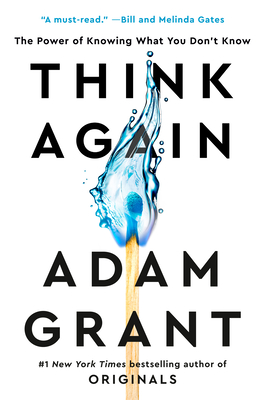
"Think Again: The Power of Knowing What You Don't Know"


 Title: "Think Again: The Power of Knowing What You Don't Know"


Rating: ★★★★★


In "Think Again: The Power of Knowing What You Don't Know," organizational psychologist and Wharton professor Adam Grant offers a riveting exploration of the transformative potential that comes with embracing the ability to rethink, unlearn, and challenge one's own beliefs. Published in 2021, this thought-provoking book challenges the conventional notions of intelligence and expertise, urging readers to adopt a mindset that thrives on continuous learning and adaptability.


One of the book's standout features is Grant's engaging storytelling combined with rigorous research. Through a myriad of real-world examples, case studies, and personal anecdotes, he illustrates the power of intellectual humility—the willingness to admit when we're wrong, reconsider our views, and actively seek out opposing perspectives. This narrative approach not only makes complex psychological concepts accessible but also infuses the book with a sense of relatability.


Grant dismantles the myth of the "know-it-all" and extols the virtues of the "learn-it-all." He presents a compelling argument for why individuals and organizations benefit from a mindset that prioritizes curiosity over conviction. By highlighting the pitfalls of cognitive rigidity, the author provides readers with a roadmap for navigating the complexities of an ever-changing world.


The book's structure is well-paced, with each chapter building on the previous one to form a cohesive and compelling argument. From discussing the benefits of intellectual humility to exploring the art of persuasion and reimagining leadership, "Think Again" covers a broad spectrum of topics related to cognitive flexibility and growth.


While the book excels in providing insights and strategies for cultivating a rethinking mindset, some readers may find the abundance of examples slightly overwhelming. However, the diversity of contexts ensures that readers from various backgrounds and fields will find relatable and applicable content.


In conclusion, "Think Again" is a masterfully crafted exploration of the transformative power of intellectual humility. Adam Grant's writing is not only intellectually stimulating but also deeply resonant, urging readers to reassess their assumptions and embrace the discomfort of uncertainty. This book is a compelling guide for anyone seeking to navigate the complexities of our rapidly changing world with an open mind, fostering a culture of continuous learning, and harnessing the power of knowing what you don't know.

Comments

Popular posts from this blog

"1984" by George Orwell: A Haunting Classic That Resonates Even Today

  " 1984 " by George Orwell is a literary masterpiece that has stood the test of time. Written in 1949, this dystopian novel paints a vivid picture of a world where individual freedom and independent thought are suppressed, and a totalitarian regime controls every aspect of people's lives. The book has been a cultural touchstone for decades and remains relevant even today, with its themes of government surveillance, propaganda, and the erosion of civil liberties. The story is set in a fictional country called Oceania, which is ruled by a party led by Big Brother. The protagonist, Winston Smith, works in the Ministry of Truth, where he rewrites history to align with the party's propaganda. Winston secretly hates the regime and longs for freedom, but his attempts to rebel are met with brutal punishment. He eventually meets Julia, who shares his desire for rebellion, and together they begin a dangerous affair. Orwell's writing is a masterful blend of vivid imagery, t...

Dystopian Brilliance: "The Handmaid's Tale" by Margaret Atwood

 Title: Dystopian Brilliance: "The Handmaid's Tale" by Margaret Atwood Rating: ★★★★★ Margaret Atwood's "The Handmaid's Tale" stands as a chilling and prescient masterpiece of dystopian fiction. First published in 1985, Atwood's exploration of a nightmarish future where women's rights are stripped away is as relevant and haunting today as it was when it first captivated readers. This seminal work has become a touchstone for discussions on power, control, and the fragility of human rights. Set in the theocratic Republic of Gilead, a theonomic state that has replaced the United States, the novel is narrated by Offred, a Handmaid whose sole purpose is to bear children for the ruling class. Atwood's world-building is meticulous, immersing readers in the oppressive regime that controls every aspect of women's lives, from their bodies to their thoughts. The narrative is a powerful commentary on the dangers of religious extremism and the erosion ...

A Haunting Tale of Sin and Redemption: "The Scarlet Letter" by Nathaniel Hawthorne

 Title: A Haunting Tale of Sin and Redemption: "The Scarlet Letter" by Nathaniel Hawthorne Rating: ★★★★★ Nathaniel Hawthorne's "The Scarlet Letter" is a haunting exploration of the consequences of sin and the complexities of human nature. Published in 1850, this classic American novel unfolds against the backdrop of Puritanical New England, immersing readers in a tale of love, shame, and the enduring struggle for redemption. At the heart of the narrative is Hester Prynne, a young woman condemned by her community for committing the sin of adultery. The scarlet letter "A" she is forced to wear becomes a symbol of her transgression, a constant reminder of the moral and social boundaries that govern the Puritan society. Hester's resilience and silent suffering transform her into a complex and sympathetic character, challenging societal expectations and norms. Hawthorne's prose is richly symbolic and laden with moral ambiguity. The vivid description...