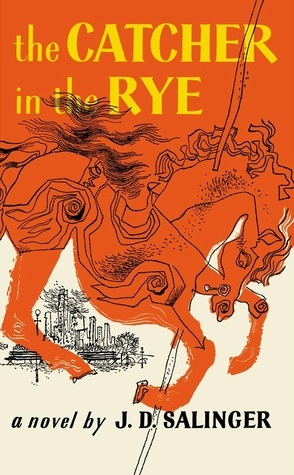
The Catcher in the Rye


 Title: The Catcher in the Rye: A Coming-of-Age Classic by J.D. Salinger


Rating: ★★★★★


"The Catcher in the Rye" by J.D. Salinger is a timeless coming-of-age novel that has left an indelible mark on literature since its publication in 1951. Narrated by the rebellious and disenchanted Holden Caulfield, the novel provides a poignant exploration of adolescence, alienation, and the quest for authenticity.


Holden Caulfield, a sixteen-year-old expelled from numerous prep schools, recounts his experiences in New York City as he grapples with the complexities of growing up. The novel unfolds over a few days, during which Holden encounters a series of characters and navigates the challenges of an adult world that he perceives as insincere and phony.


Salinger's narrative is distinguished by Holden's distinctive voice—a mix of teenage slang, cynicism, and vulnerability. The first-person perspective creates an intimate connection between the reader and Holden's stream of consciousness, allowing us to witness his raw emotions and existential struggles.


At the heart of the novel is Holden's desire to preserve the innocence of childhood, symbolized by his fantasy of being the "catcher in the rye." He imagines himself standing in a field of rye, catching children before they fall off the edge into the corrupted world of adulthood. This recurring motif encapsulates Holden's yearning for authenticity and his aversion to the superficiality of the adult world.


Holden's encounters with various characters—such as his sister Phoebe, the nuns, and the prostitute Sunny—offer glimpses into his complex psyche and the broader societal issues he grapples with. The novel explores themes of alienation, loss, and the universal struggle to find one's place in a world that often seems indifferent and hypocritical.


Salinger's writing is masterful in its ability to capture the authenticity of adolescent thought and speech. The novel's colloquial language, rich characterizations, and seamless blend of humor and melancholy contribute to its enduring resonance with readers of all ages.


"The Catcher in the Rye" has sparked discussions and debates over its themes, language, and its portrayal of teenage rebellion. Its enduring popularity lies in its ability to resonate with readers across generations, each finding in Holden Caulfield a reflection of their own struggles with identity, conformity, and the often elusive pursuit of authenticity.


In conclusion, "The Catcher in the Rye" is a literary classic that continues to captivate readers with its honest portrayal of adolescence and the perennial quest for truth and meaning. J.D. Salinger's exploration of the human condition through the lens of Holden Caulfield remains a timeless and relatable journey, making this novel an essential read for anyone seeking to understand the complexities of growing up and finding one's place in the world.

Comments

Popular posts from this blog

"1984" by George Orwell: A Haunting Classic That Resonates Even Today

  " 1984 " by George Orwell is a literary masterpiece that has stood the test of time. Written in 1949, this dystopian novel paints a vivid picture of a world where individual freedom and independent thought are suppressed, and a totalitarian regime controls every aspect of people's lives. The book has been a cultural touchstone for decades and remains relevant even today, with its themes of government surveillance, propaganda, and the erosion of civil liberties. The story is set in a fictional country called Oceania, which is ruled by a party led by Big Brother. The protagonist, Winston Smith, works in the Ministry of Truth, where he rewrites history to align with the party's propaganda. Winston secretly hates the regime and longs for freedom, but his attempts to rebel are met with brutal punishment. He eventually meets Julia, who shares his desire for rebellion, and together they begin a dangerous affair. Orwell's writing is a masterful blend of vivid imagery, t...

Dystopian Brilliance: "The Handmaid's Tale" by Margaret Atwood

 Title: Dystopian Brilliance: "The Handmaid's Tale" by Margaret Atwood Rating: ★★★★★ Margaret Atwood's "The Handmaid's Tale" stands as a chilling and prescient masterpiece of dystopian fiction. First published in 1985, Atwood's exploration of a nightmarish future where women's rights are stripped away is as relevant and haunting today as it was when it first captivated readers. This seminal work has become a touchstone for discussions on power, control, and the fragility of human rights. Set in the theocratic Republic of Gilead, a theonomic state that has replaced the United States, the novel is narrated by Offred, a Handmaid whose sole purpose is to bear children for the ruling class. Atwood's world-building is meticulous, immersing readers in the oppressive regime that controls every aspect of women's lives, from their bodies to their thoughts. The narrative is a powerful commentary on the dangers of religious extremism and the erosion ...

A Haunting Tale of Sin and Redemption: "The Scarlet Letter" by Nathaniel Hawthorne

 Title: A Haunting Tale of Sin and Redemption: "The Scarlet Letter" by Nathaniel Hawthorne Rating: ★★★★★ Nathaniel Hawthorne's "The Scarlet Letter" is a haunting exploration of the consequences of sin and the complexities of human nature. Published in 1850, this classic American novel unfolds against the backdrop of Puritanical New England, immersing readers in a tale of love, shame, and the enduring struggle for redemption. At the heart of the narrative is Hester Prynne, a young woman condemned by her community for committing the sin of adultery. The scarlet letter "A" she is forced to wear becomes a symbol of her transgression, a constant reminder of the moral and social boundaries that govern the Puritan society. Hester's resilience and silent suffering transform her into a complex and sympathetic character, challenging societal expectations and norms. Hawthorne's prose is richly symbolic and laden with moral ambiguity. The vivid description...