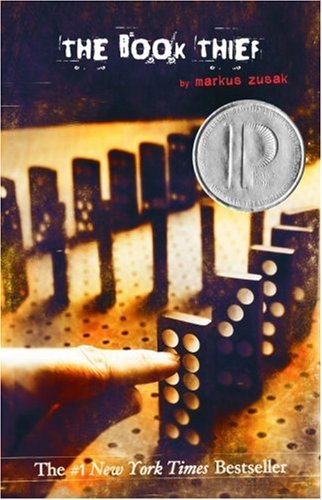
The Book Thief


 Title: The Power of Words Unleashed: "The Book Thief" by Markus Zusak


Rating: ★★★★★


Markus Zusak's "The Book Thief" is a mesmerizing and deeply poignant novel that weaves a tale of resilience, love, and the transformative power of words against the backdrop of Nazi Germany. Published in 2005, this compelling narrative is narrated by Death himself, offering a unique perspective on the human condition during one of the darkest periods in history.


At the center of the story is Liesel Meminger, a young girl sent to live with a foster family in the fictional town of Molching. Liesel steals her first book, "The Grave Digger's Handbook," at her brother's funeral, and this seemingly innocuous act marks the beginning of her journey into the world of words and storytelling.


Zusak's prose is a work of art, with Death's narration providing a hauntingly beautiful and contemplative tone. The narrative unfolds like a series of vignettes, each capturing the essence of Liesel's life and the lives of those around her. The use of Death as the narrator adds a layer of irony and perspective that enhances the emotional impact of the story.


The characters in "The Book Thief" are vividly drawn, each contributing to the novel's emotional depth. Liesel's foster parents, Hans and Rosa Hubermann, are flawed yet endearing figures who play pivotal roles in her life. Max Vandenburg, a Jewish man hidden in their basement, adds another layer to the narrative, exploring themes of friendship and sacrifice.


Books become both a refuge and a form of resistance for Liesel, as she steals and shares them during a time when words themselves are both weapons and solace. The novel explores the idea that in a world dominated by hatred and fear, literature can be a beacon of humanity, offering comfort, escapism, and a means of connecting with others.


The setting of Nazi Germany provides a stark backdrop for the novel's exploration of the impact of war on ordinary lives. Zusak does not shy away from the harsh realities of the time, yet he infuses the narrative with moments of beauty, humor, and human connection that serve as a testament to the resilience of the human spirit.


One of the novel's notable achievements is its exploration of the power of storytelling. Liesel's relationship with words, whether read, stolen, or shared, becomes a central theme that underscores the novel's belief in the transformative and redemptive nature of literature.


"The Book Thief" is a masterfully crafted novel that lingers in the hearts and minds of readers long after the final page. Markus Zusak's ability to infuse beauty into tragedy, coupled with the unforgettable characters and themes, makes this novel a timeless exploration of the enduring power of words and the indomitable spirit of humanity.

Comments

Popular posts from this blog

"1984" by George Orwell: A Haunting Classic That Resonates Even Today

  " 1984 " by George Orwell is a literary masterpiece that has stood the test of time. Written in 1949, this dystopian novel paints a vivid picture of a world where individual freedom and independent thought are suppressed, and a totalitarian regime controls every aspect of people's lives. The book has been a cultural touchstone for decades and remains relevant even today, with its themes of government surveillance, propaganda, and the erosion of civil liberties. The story is set in a fictional country called Oceania, which is ruled by a party led by Big Brother. The protagonist, Winston Smith, works in the Ministry of Truth, where he rewrites history to align with the party's propaganda. Winston secretly hates the regime and longs for freedom, but his attempts to rebel are met with brutal punishment. He eventually meets Julia, who shares his desire for rebellion, and together they begin a dangerous affair. Orwell's writing is a masterful blend of vivid imagery, t...

Dystopian Brilliance: "The Handmaid's Tale" by Margaret Atwood

 Title: Dystopian Brilliance: "The Handmaid's Tale" by Margaret Atwood Rating: ★★★★★ Margaret Atwood's "The Handmaid's Tale" stands as a chilling and prescient masterpiece of dystopian fiction. First published in 1985, Atwood's exploration of a nightmarish future where women's rights are stripped away is as relevant and haunting today as it was when it first captivated readers. This seminal work has become a touchstone for discussions on power, control, and the fragility of human rights. Set in the theocratic Republic of Gilead, a theonomic state that has replaced the United States, the novel is narrated by Offred, a Handmaid whose sole purpose is to bear children for the ruling class. Atwood's world-building is meticulous, immersing readers in the oppressive regime that controls every aspect of women's lives, from their bodies to their thoughts. The narrative is a powerful commentary on the dangers of religious extremism and the erosion ...

A Haunting Tale of Sin and Redemption: "The Scarlet Letter" by Nathaniel Hawthorne

 Title: A Haunting Tale of Sin and Redemption: "The Scarlet Letter" by Nathaniel Hawthorne Rating: ★★★★★ Nathaniel Hawthorne's "The Scarlet Letter" is a haunting exploration of the consequences of sin and the complexities of human nature. Published in 1850, this classic American novel unfolds against the backdrop of Puritanical New England, immersing readers in a tale of love, shame, and the enduring struggle for redemption. At the heart of the narrative is Hester Prynne, a young woman condemned by her community for committing the sin of adultery. The scarlet letter "A" she is forced to wear becomes a symbol of her transgression, a constant reminder of the moral and social boundaries that govern the Puritan society. Hester's resilience and silent suffering transform her into a complex and sympathetic character, challenging societal expectations and norms. Hawthorne's prose is richly symbolic and laden with moral ambiguity. The vivid description...