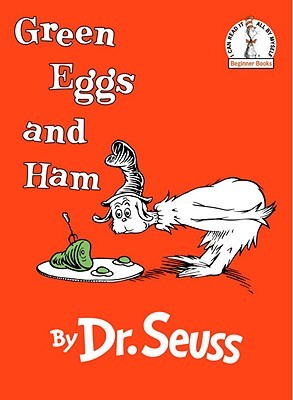
A Whimsical Culinary Adventure: "Green Eggs and Ham" by Dr. Seuss


 Title: A Whimsical Culinary Adventure: "Green Eggs and Ham" by Dr. Seuss


Rating: ★★★★★


"Green Eggs and Ham" by Dr. Seuss is a delightful and whimsical journey into the world of imagination and the joy of trying new things. Published in 1960, this classic children's book uses rhyme, repetition, and colorful illustrations to convey a simple yet profound message about openness to new experiences.


The story follows Sam-I-Am as he enthusiastically tries to persuade an unnamed character to taste the unconventional dish of green eggs and ham. Despite the initial resistance and the firm declaration of not liking them "here or there" or "anywhere," Sam-I-Am persists, leading to a series of amusing and imaginative scenarios.


One of the book's enduring strengths is Dr. Seuss's playful and rhythmic language. The clever use of rhyme and repetition not only makes the story engaging for young readers but also imparts a sense of musicality that enhances the overall reading experience. The repetitive structure encourages participation and anticipation, making it an ideal read-aloud for children.


The illustrations are a vibrant and integral part of the book's charm. Dr. Seuss's distinctive and whimsical artistic style brings the characters and their antics to life. The vivid colors, quirky shapes, and expressive faces contribute to the book's visual appeal, creating a sense of wonder and excitement on every page.


At its core, "Green Eggs and Ham" conveys a message of openness and the idea that one should be willing to try new things before forming an opinion. The book subtly imparts the lesson that preconceived notions can be barriers to discovering enjoyable experiences. The transformation of the unnamed character's resistance into enthusiastic approval is a heartwarming testament to the power of curiosity and an open mind.


The brevity and simplicity of the narrative make "Green Eggs and Ham" accessible to young readers, but its universal message resonates with audiences of all ages. The whimsy and humor of the story contribute to its timeless appeal, ensuring that it remains a cherished part of many childhoods.


Beyond its educational value, the book has become a cultural phenomenon. Phrases like "I do not like green eggs and ham" and "I would not eat them in a box, I would not eat them with a fox" have become iconic in popular culture, demonstrating the enduring impact of Dr. Seuss's playful language.


In conclusion, "Green Eggs and Ham" is a literary gem that continues to captivate generations of readers with its delightful blend of language, imagination, and life lessons. Dr. Seuss's timeless creation remains a testament to the power of storytelling to inspire curiosity, promote open-mindedness, and, above all, bring joy to readers young and old.

Comments

Popular posts from this blog

"1984" by George Orwell: A Haunting Classic That Resonates Even Today

  " 1984 " by George Orwell is a literary masterpiece that has stood the test of time. Written in 1949, this dystopian novel paints a vivid picture of a world where individual freedom and independent thought are suppressed, and a totalitarian regime controls every aspect of people's lives. The book has been a cultural touchstone for decades and remains relevant even today, with its themes of government surveillance, propaganda, and the erosion of civil liberties. The story is set in a fictional country called Oceania, which is ruled by a party led by Big Brother. The protagonist, Winston Smith, works in the Ministry of Truth, where he rewrites history to align with the party's propaganda. Winston secretly hates the regime and longs for freedom, but his attempts to rebel are met with brutal punishment. He eventually meets Julia, who shares his desire for rebellion, and together they begin a dangerous affair. Orwell's writing is a masterful blend of vivid imagery, t...

Dystopian Brilliance: "The Handmaid's Tale" by Margaret Atwood

 Title: Dystopian Brilliance: "The Handmaid's Tale" by Margaret Atwood Rating: ★★★★★ Margaret Atwood's "The Handmaid's Tale" stands as a chilling and prescient masterpiece of dystopian fiction. First published in 1985, Atwood's exploration of a nightmarish future where women's rights are stripped away is as relevant and haunting today as it was when it first captivated readers. This seminal work has become a touchstone for discussions on power, control, and the fragility of human rights. Set in the theocratic Republic of Gilead, a theonomic state that has replaced the United States, the novel is narrated by Offred, a Handmaid whose sole purpose is to bear children for the ruling class. Atwood's world-building is meticulous, immersing readers in the oppressive regime that controls every aspect of women's lives, from their bodies to their thoughts. The narrative is a powerful commentary on the dangers of religious extremism and the erosion ...

"Don't Believe Everything You Think"

 Title: "Don't Believe Everything You Think" Rating: ★★★★☆ "D​on't Believe Everything You Think" by Thomas Kida is a compelling exploration of critical thinking and the cognitive pitfalls that can lead individuals astray. Published in 2006, this book serves as a practical guide for readers to navigate the complexities of decision-making, offering insights into common cognitive errors and biases that influence our thoughts and beliefs. One of the book's key strengths is its accessibility. Kida takes a complex topic—critical thinking—and breaks it down into easily digestible concepts, making it suitable for a broad readership. He uses real-world examples and anecdotes to illustrate each cognitive pitfall, enhancing the book's relatability and ensuring that readers can apply the principles to their own lives. The central premise revolves around the idea that human thinking is prone to systematic errors, and individuals must actively engage in critical t...